


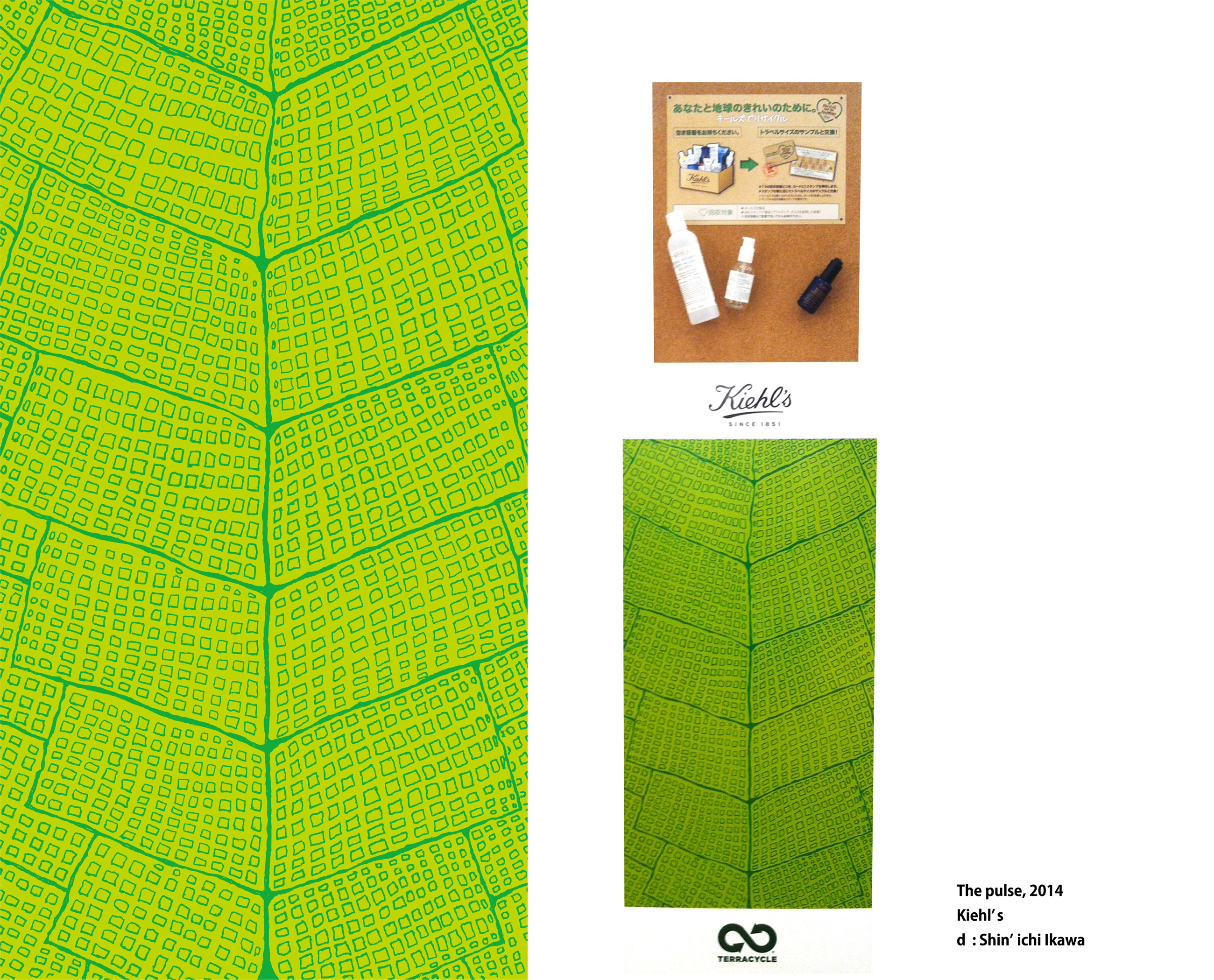


Recycling box | Kiehl’s
Theme : Nature in the city
A recycling box design created for Kiehl’s, the New York-based skincare brand, under the theme “Nature in the City.”
Title : The pulse
The concept, “Pulse,” was inspired by the veins of leaves and the appearance of buildings rising across the city. These forms suggest a connection between the way plants are alive and breathing and the way the city itself seems to breathe.
Through recycling, the design expresses the idea of becoming part of the “pulse” of both nature and the urban landscape.


The project of cooperation between industry and academia 2010 | FISSLER JAPAN Ltd. + Tama Art University + Tokyo City University
Theme : what can we create with 1,000 Pots?
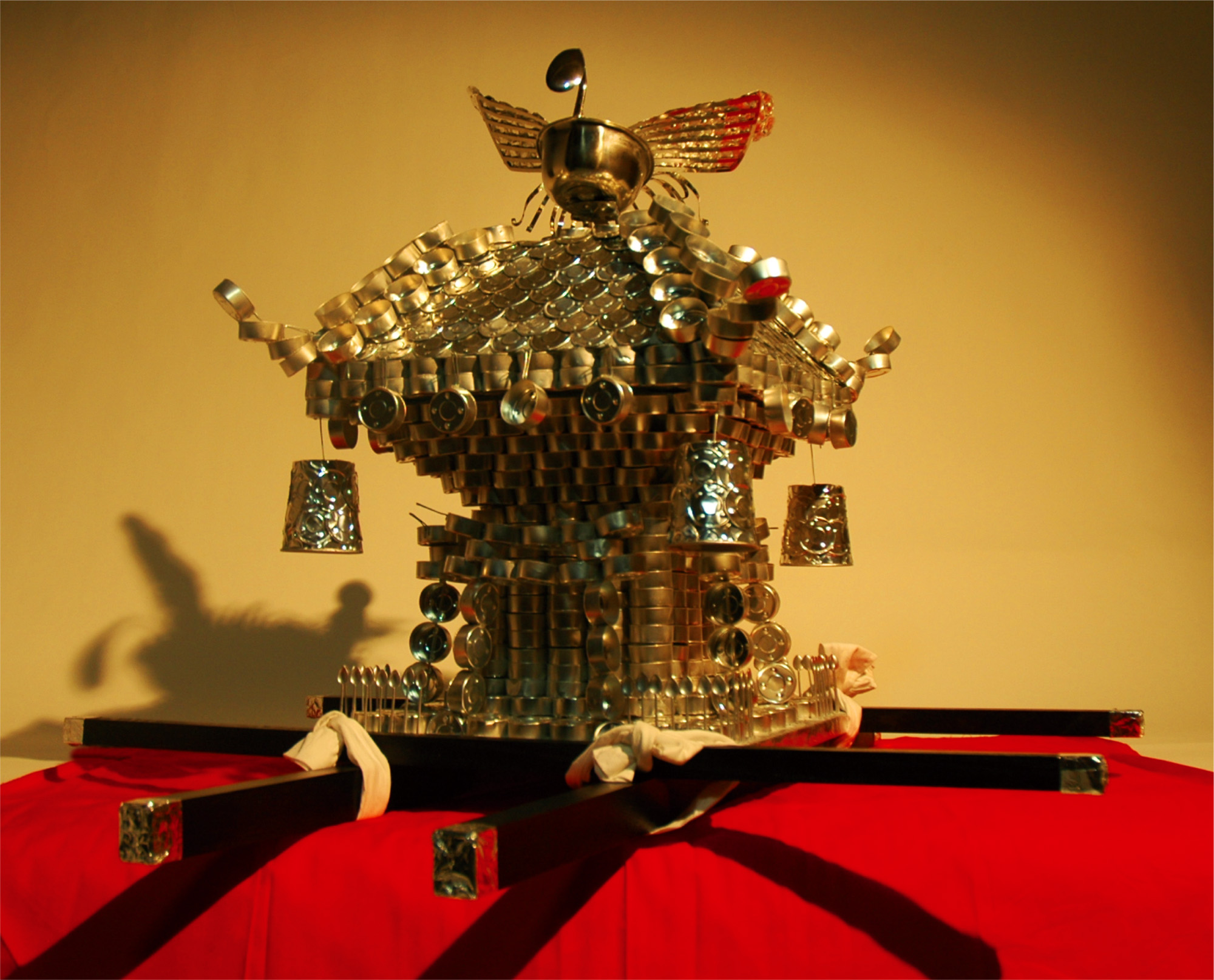
Title : A Mikoshi Made from 1,000 Pots
An industry-academia collaborative project conducted as part of a PBL course at the Department of Environmental Design, Tama Art University, in collaboration with Fissler.
The challenge presented by Fissler was: “What can we create with 1,000 pots?”
The project began with each student developing ideas independently. The students then voted on the ideas they found most compelling, and the creators of the most popular proposals formed teams around their concepts.
Over the course of six months, we developed and refined our ideas, concepts, presentations, and models with guidance from university professors and senior creative professionals from ADK. The process included an interim presentation before the final presentation.
The final proposals were presented and evaluated by Fissler’s CEO, the company’s regional head for Asia, and representatives from Fissler Japan.
My team developed a concept based on a Mikoshi, a traditional Japanese portable shrine. The origin of the mikoshi is associated with a tradition of carrying a shrine in an attempt to awaken the deity during years of poor harvests.
Since pots are used to prepare food, we developed the idea of transforming them into a mikoshi. From the phoenix placed at the top to the structure itself, the mikoshi was constructed entirely from Fissler pots and tableware.
We proposed expanding the project beyond the university by taking the mikoshi to large-scale Japanese festivals and exhibiting it at department stores.
The project received the Excellence Award.
Although we did not receive the Grand Prize, the judges raised an important concern about incorporating religion into corporate communications. This perspective gave me a valuable opportunity to reconsider how cultural elements can be used in communication and became an important learning experience for my future work.